
What is BonDiv
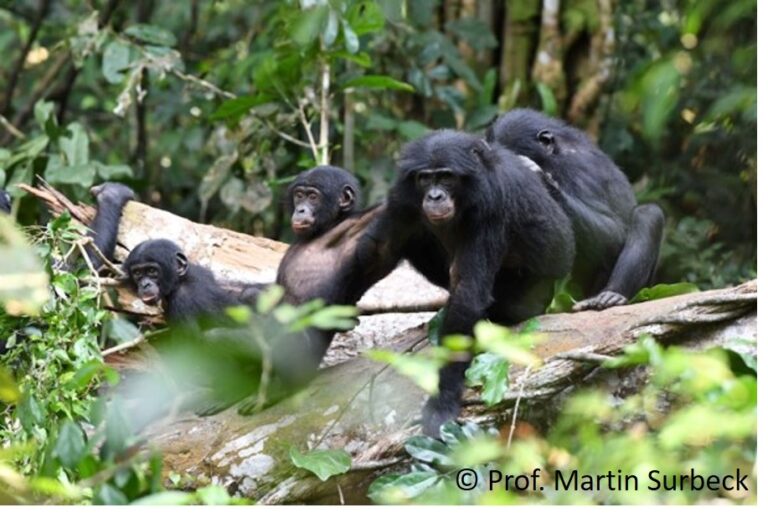
The BonDiv (Bonobo Diversity) project is a large-scale collaborative research network designed to document intraspecific diversity in bonobos (Pan paniscus), allowing for simultaneous study of multiple sympatric species across 30 sites within the Democratic Republic of Congo.
By establishing a network of standardized temporal research sites, BonDiv seeks to understand ecological, behavioural, genetic, and environmental variation across the bonobo range, while simultaneously building local capacity and strengthening conservation action.
The origin of BonDiv
The BonDiv project idea was born in Leipzig in 2019, during a discussion between Erin Wessling and Martin Surbeck about the relationship between the ecology and behaviour of bonobos and chimpanzees. From there, it extended to the role of the ecology in the process of speciation between chimpanzees and bonobos, at which point Hjalmar Kühl joined the discussions.
It became clear that replicating or building on the PanAf project and starting such an unprecedented project for Bonobos would help us find the answer to this big question and would reveal the so far unknown bonobo within-species diversity.
In addition, it seemed the right moment to start such an large-scale endeavor, given its high benefits to conservation efforts during times of decline of bonobo and sympatric wildlife in the Congo Basin.
Primary Objectives
1. Characterize bonobo behaviour, ecology, and diversity; and sympatric wildlife.
2. Identify the drivers of bonobo distribution and assess current and emerging threats.
3. Build a network of standardized research sites with comparable datasets.
4. Equip decision-makers with robust, balanced data on bonobo populations and ecological indicators.
5. Strengthen conservation capacity in DRC through training, workshops, and collaboration.
How BonDiv Works
- Site Selection: BonDiv identifies locations across key habitats and protection statuses.
- Researcher Training: in the DRC and Germany.
- Field Deployment: Teams travel from Kinshasa to remote field locations.
- Grid Establishment: A 25 km² grid is installed and monitored for 12 months.
- Field Camps: Researchers, assistants, and community members work on-site.
- Data Collection: Camera traps, vegetation plots, behavioural observations, eDNA, climate data & more.
- Satellite Sites: Additional sampling areas expand coverage.
- Data Sharing Platform: Results shared with partners and authorities in real time.
Why BonDiv Matters
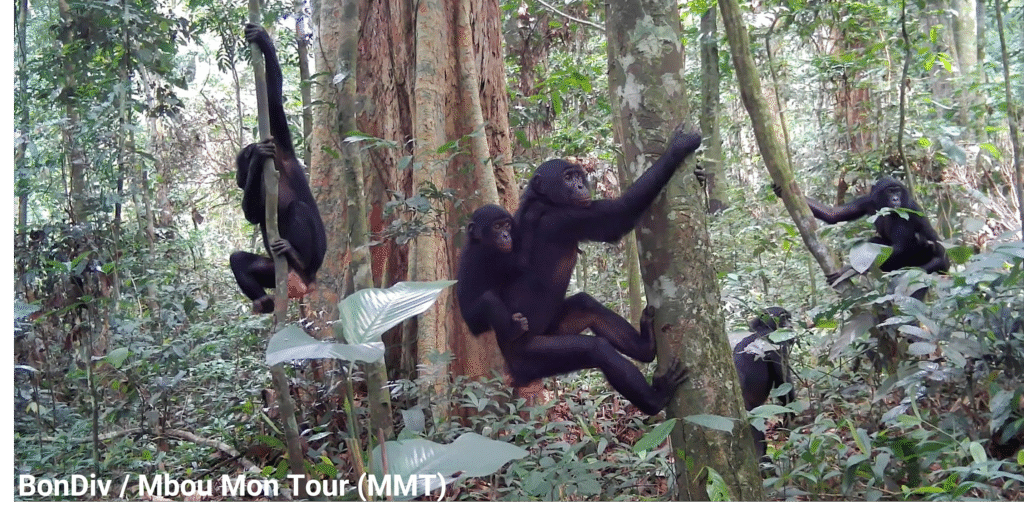
• Bonobos remain one of the least studied great apes, existing knowledge is biased toward a small number of long-term research sites, which limits ecological and behavioural characterization, and conservation priorities. BonDiv is generating the first standardized, range wide dataset for the bonobos.
• Bonobos – umbrella species: their conservation requires the protection of large, intact areas of Congo Basin forest, which safeguards thousands of other species, critical ecosystem services, and the livelihoods of local communities. BonDiv contributes not only to the survival of a single endangered species but to broader landscape-scale biodiversity conservation.
• Bonobo populations face habitat loss, forest fragmentation, illegal hunting, and climate change. BonDiv strengthens early detection of emerging threats, monitors population trends, and translates scientific findings into conservation action through close collaboration with ICCN and local and international partners.
• The BonDiv project invests in Congolese researchers, community-based conservation organizations, and government institutions through training, co-development of research, and institutional partnerships.
BonDiv Overview
The BonDiv project is uniquely positioned to shape the future of bonobo conservation and research and to provide range-wide insights into one of the worldʼs most important and threatened great ape species and its ecosystems.
Born in 2019,
launched
in 2023.
9 main sites to date
(3 of them ongoing)
+
14 satellite sites
(of them ongoing)
19 BonDiv
researchers trained,
11 of them Congolese.
60,000+
camera trap videos
10,000+ samples collected
20+ areas
surveyed
to date
Collaboration
agreements:
8 local partners
8 research groups
Real-time data sharing with conservation authorities